In the current economic climate of 2026, building equity in your own name is the only way to ensure long-term financial stability. It is a sobering reality that 43% of professionals with side-hustle assets report earning more per hour than they do in their traditional salaried job, proving that your expertise is significantly undervalued by the standard corporate payroll.
Key Takeaways
| Focus Area | Critical Action for 2026 |
|---|---|
| Mindset Shift | Move from task completion to value creation and system building. |
| Brand Assets | Evolve from a “hidden expert” to a recognized thought leader through Personal Brand Evolution Strategy. |
| Networking | Build relationships that provide deal flow, not just a paycheck. |
| Digital Ops | Implement a Digital Transformation Roadmap to automate your delivery. |
| Leadership | Master the transition from following orders to leading organizations. |
Common Search Question: How do I turn my professional skills into a business?
Answer: Start by identifying the “productizable” parts of your daily work, then use an Employee-to-Owner Transition Roadmap to create systems that run without your manual labor.
Common Search Question: Can I build assets while working a full-time job?
Answer: Yes. Successful transitions usually happen over a 90-day blueprint where you build your entrepreneurship foundation while still employed.
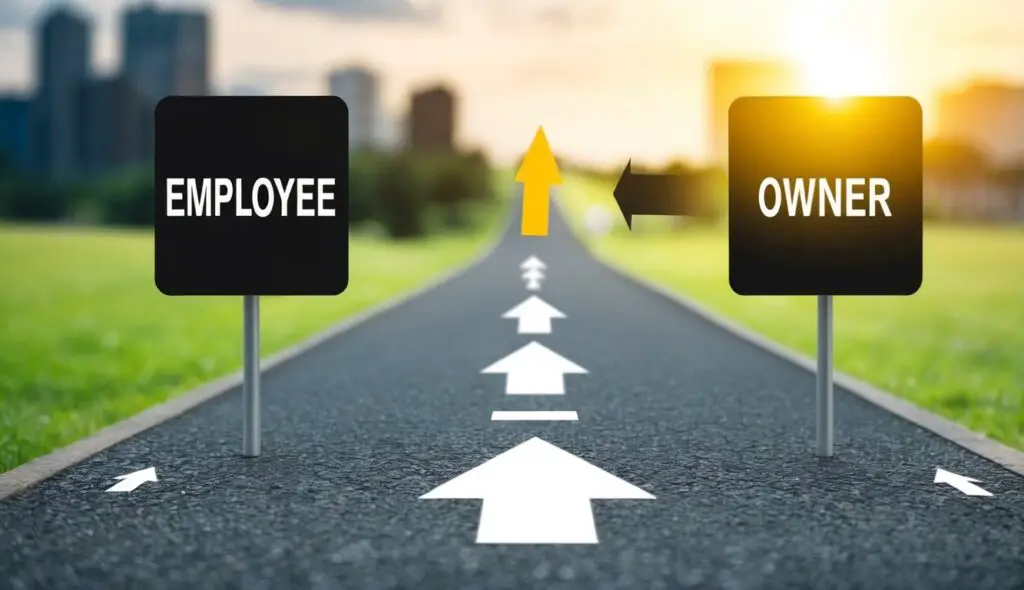
Transitioning from Employee Mindset to Ownership Thinking
Most professionals are stuck in a “security mindset” that relies on the next paycheck. True ownership requires a radical shift where you prioritize building systems and scalable processes over simple task completion.
We see far too many talented experts trade time for money indefinitely. Real growth starts when you take full responsibility for outcomes rather than just fulfilling a job description.
You must learn to make independent decisions and move past the need for external validation. This psychological pivot is the foundation of turning your internal knowledge into a marketable, external asset.

The Digital Transformation Roadmap for Professional Leaders
Leading in 2026 requires more than technical know-how. You must understand the digital landscape to design roadmap initiatives that align your expertise with modern business objectives.
We focus on building a culture of continuous improvement and innovation within your own ventures. This involves setting clear digital goals and managing the change as you move away from legacy workflows.
Chief digital officers and technology leaders are the architects of this new economy. By adopting their strategies, you can measure the impact of your digital initiatives and ensure they produce a real return.


Building an Evolution Strategy for Your Personal Brand
The line between an employee and an industry expert has completely blurred. You need a 90-day blueprint to establish yourself as a trusted voice in your specific niche.
We emphasize authenticity and trust as the core elements of a strong personal brand. Content creation shouldn’t just be about “posting,” but about solving real industry problems with unique insights.
Consistency on professional platforms allows you to add value while building an asset that belongs to you. This strategy ensures you are no longer invisible in a crowded marketplace.

A concise visual guide showing how to convert your professional know-how into valuable, ownable assets through a five-step process. Learn actionable steps to monetize expertise and build lasting assets.
Strategic content creation is a multiplier for your professional value. When you share unique insights, you move from being a commodity worker to a sought-after authority.


Networking Strategies to Bridge the Gap from Employee to Owner
Making the leap requires more than industry knowledge. Building a strong professional network during your transition can increase your success rate by up to 70%.
We encourage professionals to actively engage with industry associations and maintain positive relationships with current colleagues. These relationships often become your first clients or referral partners.
Effective Networking Strategies for Business Transition focus on mutual value rather than simple job seeking. You are looking for collaborators and mentors who have already made the jump.


Mastering Entrepreneurial Instincts through Systematic Development
Moving from an employee mindset to an entrepreneurial outlook means embracing uncertainty. You must take full responsibility for every outcome, focusing on creating value instead of just checking off boxes.
We believe entrepreneurs think differently because they prioritize building systems. A business is only an asset if it can eventually function without your 24/7 presence.
Strategic planning is the tool we use to bridge this gap. This involves setting clear goals, analyzing market opportunities, and measuring results with cold, hard data.


Leveraging Strategic Storytelling for Measurable Business Growth
Data-driven success stories are more effective than simple feature lists. We’ve seen tech startups jump 47% in sales simply by shifting their focus to customer transformations.
Strategic storytelling helps you build brand identity and loyalty. Brain research in 2026 continues to show that narratives trigger emotional responses that traditional marketing cannot touch.
We focus on the ROI of Strategic Storytelling to ensure your message drives revenue. If your story doesn’t lead to a measurable sales increase, it is just noise.

Leadership Communication for the New Generation of Owners
The transition from following orders to giving them is one of the hardest shifts for new owners. You must master foundations of clarity and transparency to set clear expectations for your team.
We emphasize active listening and empathy as key leadership tools. Great leaders in 2026 are exceptional communicators who know how to inspire and motivate teams in hybrid environments.
Mastering Communication Strategies for New Business Owners allows you to influence stakeholders and persuade clients with authority. Your voice is the primary tool for directing your new organization.


Scaling Your Expertise into Digital Products and Services
Your expertise should eventually live in assets that don’t require your presence. This means packaging your knowledge into structured guides, courses, or specialized software tools.
We suggest starting with a Knowledge Center approach where you document your methodologies. This becomes the intellectual property foundation of your future business.
Scaling requires you to stop being the “doer” and start being the “owner.” This pivot allows you to serve 100 clients with the same effort it used to take to serve one.

Overcoming the Psychological Barriers of Professional Transitions
The biggest hurdle isn’t technical, it’s the Psychology of Successful Business Transitions. Fear of losing a steady paycheck often keeps high-performers stuck in roles they have outgrown.
We work with professionals to build resilience and leadership strategies for these tough times. Understanding that transition is a process of growth, not just a risk, is vital for success.
You must prepare for the entrepreneurial mindset by accepting that failure is just data. Every setback in your new venture is an opportunity to refine the system you are building.

Navigating Market Dynamics and Operational Reality
In 2026, the market rewards those who can navigate operations amid inflation and economic shifts. We focus on Essential Running a Business Basics to ensure your foundation is solid.
Using a Running a Business Checklist helps you avoid common pitfalls in the first 90 days. This structured approach removes the guesswork from daily operations.
Success is a probability game, not a guarantee. By following a proven roadmap, you dramatically increase the likelihood that your expertise will result in a profitable owned asset.


Conclusion
Turning your professional expertise into owned assets is the ultimate hedge against an uncertain future. By moving from an employee mindset to a system-builder outlook, you can finally capture the true value of your knowledge.
We provide the map, but you must drive the car. Start your transition today by evaluating your readiness and crafting a concrete plan to move from renting your time to owning your future.
Do you have enough money to start?
Add your savings, what you can borrow and your costs, and our free Business Startup Readiness Calculator plays out the first years month by month to show whether the money lasts.
Runs in your browser; nothing you type is stored.