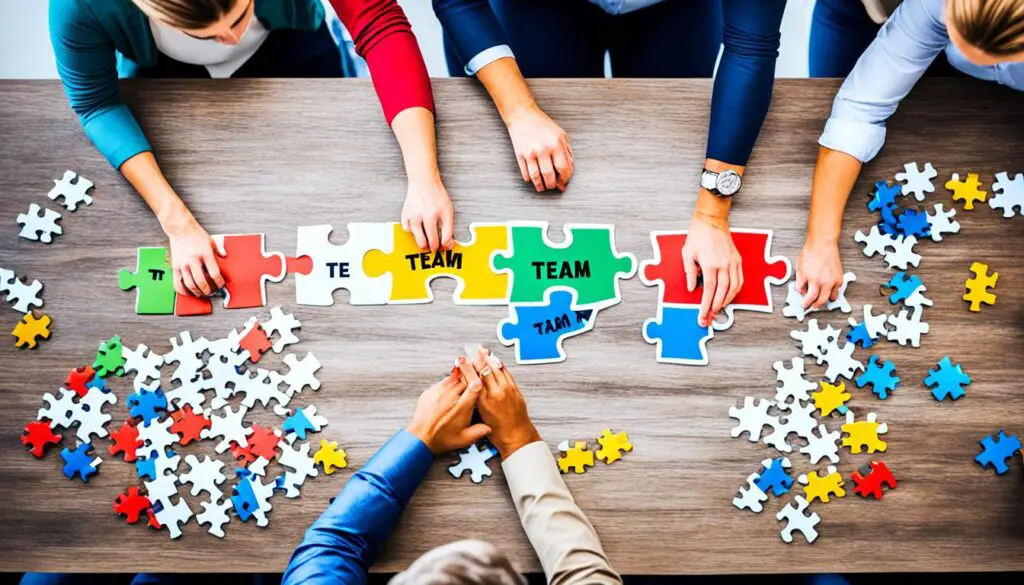
Teams that use their strengths well are 12.5% more productive. In our work world today, strong teamwork is key to success. Many groups are now working in a way that values the special skills each person brings. According to Gallup’s employee engagement research, organizations that focus on strengths see significantly higher engagement and retention.
Key Takeaways:
- Leveraging strengths in teams can increase productivity by 12.5%.
- A strengths-based approach emphasizes utilizing individual talents for improved team dynamics.
- Collaboration and productivity are enhanced when teams recognize and celebrate each member’s strengths.
- By embracing a strengths-based approach, organizations can create a culture of engagement and high performance.
- Coaching and intervention focused on strengths can address team dynamics and improve overall team effectiveness.
Why Use Proxy Experiences for Team Dynamics Discussions?
Proxy experiences let teams practice collaboration in a low-stakes setting before tackling real workplace challenges. These shared activities build trust and surface each person’s strengths naturally.
Before diving into team issues like low trust, it’s best to prepare. Creating a safe, engaging space is key. One good way to do this is with a fun team activity. This introduces people to working together in a positive light.
Proxy experiences let teams have fun, work together, and build trust. They learn about each other’s skills and weaknesses without stress. Acting in a non-work setting helps create a better talk about their work together.
Choosing the right proxy activity is important. It should connect with the team’s goals and values. Everyone should have a chance to shine. This shared success lifts team spirit. It makes them see the good in their teamwork.
“Proxy experiences are a powerful catalyst for team discussions about collaboration and dynamics. They allow teams to come together in a low-stakes environment, encouraging open and constructive dialogue.”
Starting discussions with proxy experiences helps teams a lot. It breaks barriers and builds trust. This leads to more effective teamwork in the future.
Below is a table of great team building activities. These are perfect for proxy experiences:
| Team Building Activity | Key Benefit | Best For |
|---|---|---|
| Escape Room Challenge | Encourages problem-solving, communication, and teamwork | Teams that need to improve collaboration under pressure |
| Outdoor Adventure Course | Promotes trust-building, cooperation, and resilience | Teams rebuilding trust after conflict |
| Cooking Class | Fosters collaboration, delegation, and creativity | New teams learning to communicate roles |
| Volunteer Project | Builds shared purpose and empathy | Teams seeking deeper meaning in their work |
How Do Individual Strengths Shape Team Discussions?
Tools like CliftonStrengths reveal each person’s unique contributions and give the team a shared language for collaboration. When individual strengths are mapped to team needs, discussions become more focused and productive.
The CliftonStrengths tool is key to team understanding. But, starting with the team’s experiences is crucial. It helps team members realize and value their individual strengths. This leads to better teamwork.
Teams use the Team Strengths Grid for a better view. This tool links personal strengths to what the team actually needs. It boosts self-awareness and clarity of purpose.
“Understanding individual strengths is the first step towards building a strong foundation for productive team conversations and improved performance.”
Individual strengths coaching is vital here. In these sessions, members get specific advice. They learn to use their strengths best. This not only boosts their confidence but also their contribution to team talks.
Adding this coaching to team talks lets teams thrive. They tackle problems better and work more closely. This leads to better results.
| Benefits of Individual Strengths Coaching | Outcome |
|---|---|
| Enhanced self-awareness | Team members understand their unique contribution |
| Improved team collaboration | Clearer role alignment and fewer conflicts |
| Increased team performance | Higher productivity through strength-based task assignment |
As team individuals understand their strengths more, they do better together. They are able to take on big problems and win. Their combined efforts lead to outstanding outcomes. This mutual understanding fosters a climate of collaboration and trust, allowing team members to communicate openly and share ideas freely. By implementing effective team dynamics strategies, they can leverage each member’s unique abilities, turning challenges into opportunities for growth. Ultimately, this synergy enhances their resilience and creativity, driving the team to achieve remarkable results.
Case Study: Strengths-Based Team Discussions
Picture a company that uses the CliftonStrengths tool and coaching for each team member, so it can match strengths to roles precisely.
“Through individual strengths coaching, we unlocked the full potential of our team. Each team member brought their strengths to the table, and it transformed the way we collaborate and problem-solve.”
In a company like this, things usually get better. Communication and teamwork improved thanks to understanding and using individual strengths more. It led to great results for the business.

Using individual strengths coaching in team talks really makes a difference. It shows that each person’s strengths matter. And that’s how teams succeed the best. For more on optimizing how teams function, see key strategies for team dynamics and leadership.
How Does Embracing Conflict Improve Team Outcomes?
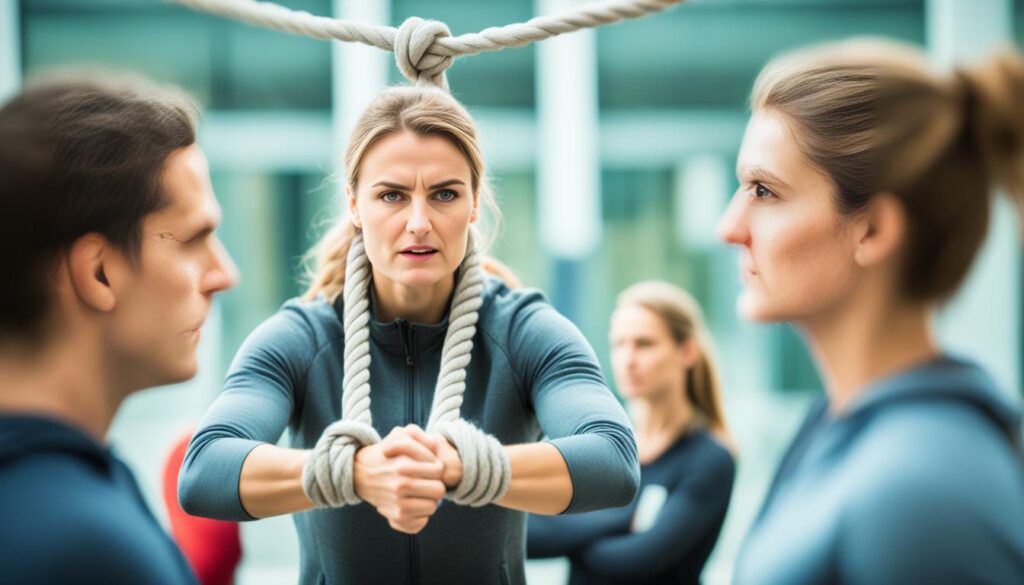
High-performing teams treat conflict as a signal that different strengths are colliding, not as a threat. When managed with respect and clear ground rules, disagreements produce better ideas and stronger relationships.
Conflict is part of any team. It’s not always bad. High-performing teams see it as a chance for better results. They use conflict to grow and work together better.
In teams where things don’t work well, talking openly about the conflict is key. Team members learn how their skills affect how they handle disagreements. This helps them use their strengths to resolve conflicts better.
“True dialogue is essential for effective conflict resolution. It allows team members to express their perspectives openly while actively listening to others, fostering empathy and understanding.”
It’s important to have a safe place for open talks. Ground rules that support respectful, honest talks are crucial. They help teams address differences, find common ground, and solve problems together.
Fostering a Culture of Conflict Resolution
Building a culture where resolving conflict matters takes work. Organizations can teach teams the skills needed for positive conflict resolution. This includes listening, understanding other points of view, and solving problems together. SHRM’s workplace culture resources offer practical frameworks for building this kind of environment.
It’s key for conflict resolution to match the team’s goals and values. Team members understand why it’s important to resolve conflicts. They see it as a way to move towards shared goals. This way, they want to fix issues in a helpful way.
Benefits of Embracing Conflict
Seeing conflict as a chance leads to many benefits. Open talks and problem-solving bring new ideas to the table. This leads to more creativity and better methods of working.
Also, dealing with conflict well makes the team stronger. Trust grows, and people get to know each other better. This understanding makes them work more effectively together. The result? Better work and a happier team.
| Conflict Approach | Team Impact | Outcome |
|---|---|---|
| Avoiding conflict | Surface agreement, hidden resentment | Stagnation and disengagement |
| Embracing conflict constructively | Open dialogue, diverse ideas surface | Innovation and stronger relationships |
| Strengths-aware resolution | Each member contributes their perspective | Faster resolution, higher buy-in |
Why Start with Partnerships to Strengthen Teams?
One-on-one partnerships create micro-trust that gradually spreads across the whole team. This bottom-up approach works especially well in teams where broad trust has broken down.
Creating trust in teams that struggle can be hard. To make it easier, start by focusing on building strong partnerships. This means team members should work on getting along better in smaller groups. Over time, this improves trust and teamwork. It breaks down barriers and helps people feel more connected. This makes the team work better together, boosting productivity.
Focusing on partnerships makes team members form deep connections. By talking, listening, and understanding each other, they grow closer. Strong relationships help people work together smoothly. They can communicate openly and support each other well. By knowing each other’s strengths, the team moves ahead together.
Nurturing One-on-One Relationships
To build strong partnerships, team members must invest time and effort. Here’s what they can do:
- Have Regular Check-ins: Meet up to talk about work and personal stuff. This builds a bond between team members.
- Listen Actively: Listen well; ask questions and show you care. This makes understanding and connections stronger.
- Communicate Well: Keep talking openly. Make sure everyone can share ideas and feedback without fear. This prevents problems.
- Support Each Other: Help your colleagues when you can. Team up on projects, share what you know, and give helpful feedback. This boosts everyone’s success.
- Highlight Wins: Recognize and celebrate each other’s achievements. This boosts morale and makes the team stronger.
Choosing to focus on strong partnerships improves the workplace in big ways. It makes teams work better together, trust each other more, and boosts productivity.
| Benefits of Powerful Partnerships | Examples |
|---|---|
| Enhanced Collaboration | Teams work together seamlessly, leveraging each other’s strengths for optimal outcomes. |
| Increased Trust | Team members rely on and support each other, knowing their partnerships are built on trust. |
| Improved Problem-Solving | Partners collaborate effectively to address challenges, utilizing diverse perspectives and expertise. |
| Heightened Creativity | Partners encourage innovative thinking and generate new ideas through free expression and brainstorming. |
| Enhanced Team Morale | Team members feel valued and motivated, leading to increased job satisfaction and engagement. |
What Benefits Does a Strengths-Based Approach Deliver?
A strengths-based approach creates measurable gains for individuals, teams, and the entire organization simultaneously. When people work from their strengths, engagement rises, collaboration deepens, and results follow.
The CliftonStrengths assessment is really helpful for people, teams, and companies. For people, it helps them grow in their jobs and lives. It shows their strong points and lets them use these in their careers. This helps them be the best they can be, enjoy their work more, and be successful.
For teams, this assessment is gold. It lets team members know each other’s strengths. This boosts how well they work together. When everyone knows what they’re good at, they can help each other and do better work together.
It’s also great for companies. It opens the door to better teamwork. By showing what each team does best and helping them understand each other, the assessment builds a strong team culture. This culture values everyone’s unique skills and works better towards common goals. Gallup Workplace research consistently shows that strength-focused organizations outperform their peers.
This approach changes how we look at work. It helps everyone grow and do better in their jobs. People focus on what they’re good at, teams use everyone’s skills, and companies get strong teams. This all leads to success for everyone involved.
How Can a Strengths-Based Culture Enhance Team Dynamics?
Creating a strengths-based culture significantly enhances team dynamics by fostering collaboration and mutual support. When team members are encouraged to leverage their unique strengths, it leads to increased engagement and innovation. Ultimately, exploring strengthsbased culture and performance outcomes reveals a direct correlation between employee satisfaction and organizational success. This emphasis on individual strengths not only empowers employees but also cultivates a sense of belonging and trust within the team. As team members become more aware of each other’s capabilities, it paves the way for more effective communication and streamlined processes. Consequently, improving team collaboration strategies becomes essential, as it allows groups to harness diverse talents and perspectives, driving collective achievement and enhancing overall productivity.
Conclusion
Using the CliftonStrengths assessment to focus on strengths can transform workplace cultures. It helps teams understand individual strengths through discussions. This can boost teamwork, productivity, and overall performance. Remember, trust and strong relationships take time to build. Yet, these strategies aid teams in reaching high performance and their goals.
The CliftonStrengths assessment is a key tool for seeing individual strengths and their team effects. It helps people grow, increasing their success at work and engagement. For teams, it deepens the appreciation for each member’s unique strengths. This leads to better team spirit and performance. Overall, it helps organizations improve self-awareness, teamwork, development, and results.
Taking a strengths-based approach enhances productivity and teamwork. With the CliftonStrengths assessment, teams find and use every member’s full potential. This creates a work environment focused on active engagement and top performance. Discovering and nurturing strengths helps teams tackle issues, foster innovation, and meet goals in a fast-changing market. To see how these principles extend into modern work environments, explore the hybrid leader’s toolkit for bridging physical and virtual authority.
Frequently Asked Questions
How does leveraging strengths improve team dynamics?
When team members understand and use each other’s unique strengths, collaboration becomes natural and friction drops significantly. This awareness lets people assign tasks based on talent rather than default roles, boosting overall productivity.
Why use proxy experiences in team discussions?
Proxy activities create a low-stakes environment where teams practice collaboration and discover each other’s strengths before tackling real workplace challenges. These shared experiences build trust and open the door to more honest, productive conversations.
What role does individual strengths coaching play?
Coaching helps each team member identify their top strengths and learn how to apply them directly to team goals. This personalized development increases confidence, engagement, and the quality of each person’s contribution to group discussions.
Is it necessary to build trust with every team member in a dysfunctional team?
In struggling teams, it is more effective to start by building strong one-on-one partnerships within smaller groups. These concentrated connections create a foundation of trust that gradually spreads across the entire team over time.