In today’s fast-paced business world, building a strong, cohesive team isn’t just about hiring the right people – it’s about helping them connect and work together effectively. That’s where team building games come in. Unlike traditional meetings or forced social events, games create natural opportunities for people to interact, solve problems, and build relationships. According to a 2023 Gallup study, teams that regularly engage in structured team building activities are 21% more productive than those that don’t. This isn’t just about having fun – it’s about creating measurable business results.
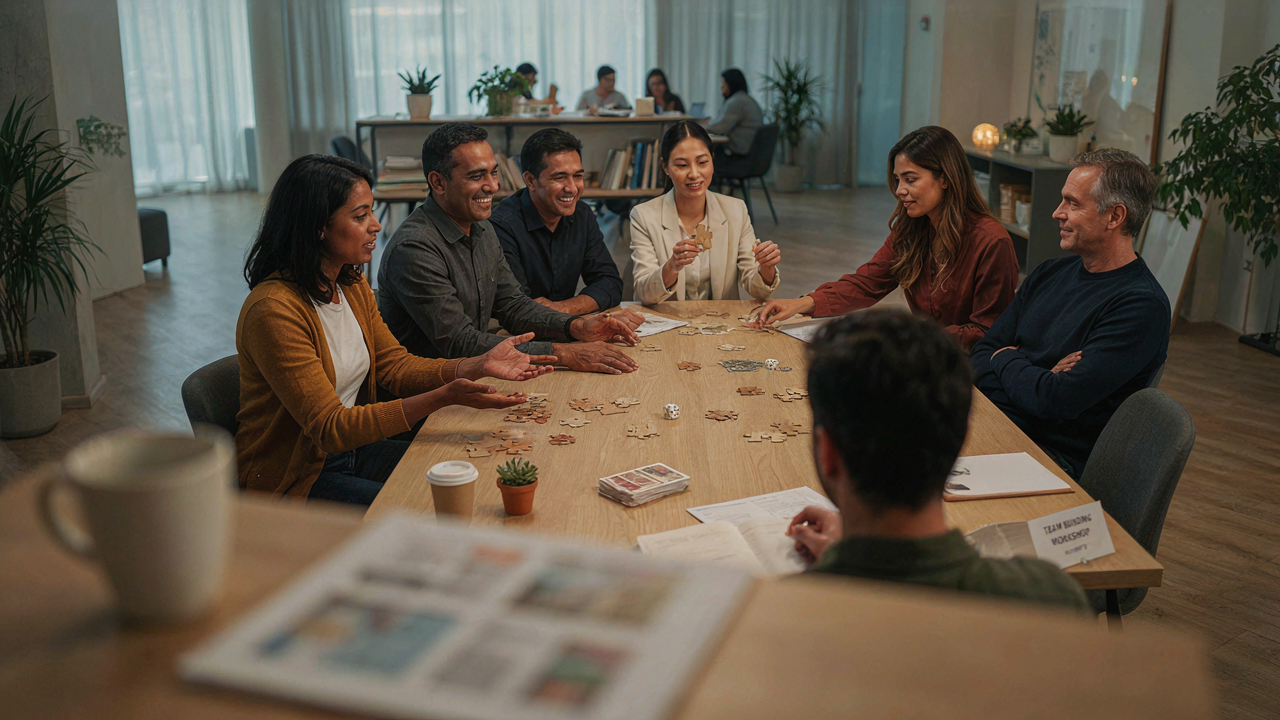
“When people play together, they learn to work together,” says Dr. Sarah Chen, organizational psychologist at Stanford University. “The barriers between colleagues naturally break down, creating space for authentic connections and improved communication.” Her research shows that teams who spend just 30 minutes a week playing structured games show significant improvements in communication effectiveness and problem-solving abilities.
Why Do Games Matter for Team Building?
Team building games create shared experiences that break down barriers and build trust in ways that meetings and memos cannot. When people play together, they develop communication patterns, problem-solving habits, and relationships that carry directly into their daily work.
Consider your own experiences with games. Whether it’s a casual card game or an intense escape room challenge, games create shared experiences that stick with us. When people play together, they naturally fall into patterns of cooperation and communication that carry over into their work. The beauty of using games for team building lies in their ability to create low-stakes environments where people feel safe to take risks, make mistakes, and learn from each other.
Think about the last time you played a game with others. You probably found yourself strategizing with teammates, celebrating successes together, and working through challenges as a group. These same dynamics play out in workplace games, but with an added bonus: the skills and relationships built during play translate directly to improved workplace performance. Research shows that teams who regularly engage in game-based activities report a 27% increase in their ability to collaborate effectively on work projects.
“Game-based learning has revolutionized how we approach team development,” notes workplace culture expert Maria Rodriguez. “We’re seeing teams solve real business problems using skills they developed while playing seemingly simple games. The transfer of learning is remarkable.”
The Real Benefits You’ll See
The impact of game-based team building goes far beyond just having fun. When companies commit to regular game activities, they create an environment where trust and communication flourish naturally. A recent Harvard Business Review report found that teams who participate in regular game-based activities show 34% lower turnover rates – a significant number that directly affects the bottom line.
Mark Thompson, CEO of TeamWorks Inc., offers compelling evidence: “After introducing weekly team games, we saw employee satisfaction scores jump by 40%. People weren’t just happier – they were better at handling workplace challenges too. Our customer satisfaction scores improved by 23% in the following quarter, and we attribute this directly to better team collaboration.”
What Types of Games Drive the Best Results?
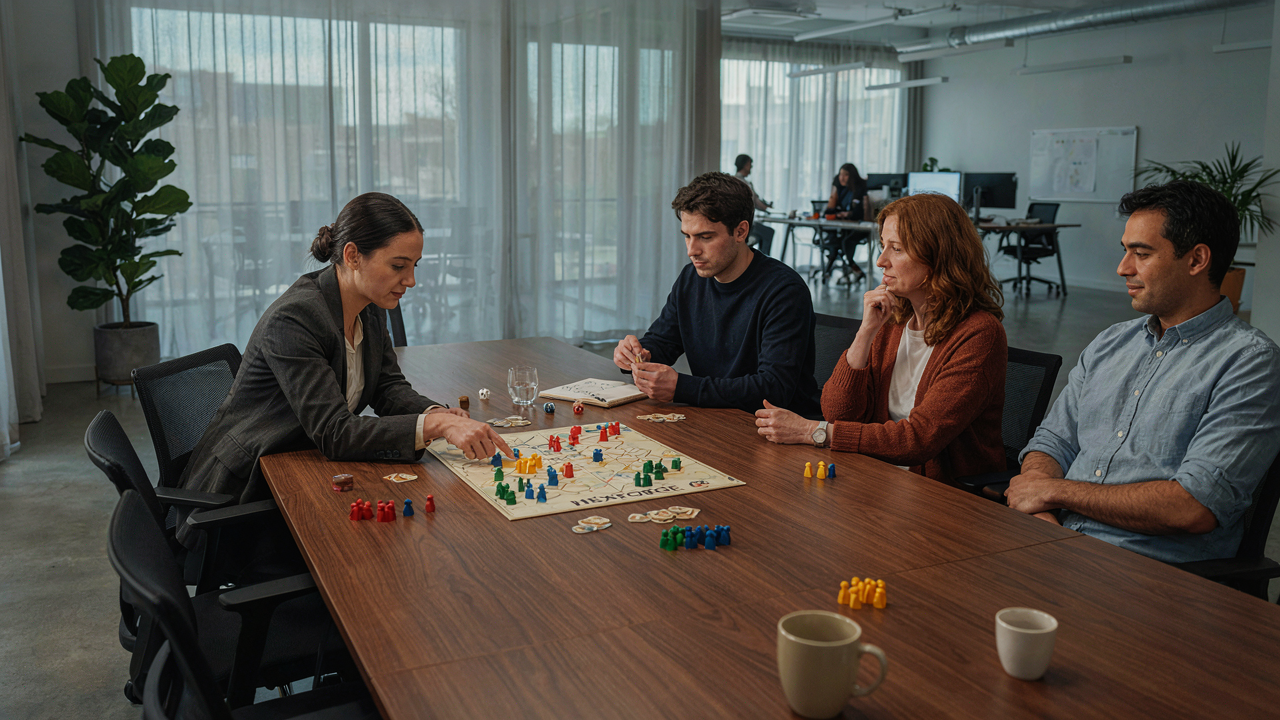
Different game types target different team outcomes — ice breakers build initial connections, strategy games sharpen collaboration, and creative games unlock innovation. Choosing the right type for your team’s current needs maximizes the return on every minute invested.
Ice Breaker Games: Breaking Down Initial Barriers
Ice breakers do more than just warm up a room – they create lasting connections. Companies like Salesforce have revolutionized their onboarding process with games like “Human Bingo” and “Speed Meeting.” “Since implementing structured ice breakers, we’ve seen new team members integrate 60% faster into their departments,” reports Tom Wilson, Head of Talent Development at Salesforce.
Card Games: More Than Just Playing with a Deck
Don’t underestimate the power of a simple deck of cards. Card games create intimate settings where people naturally open up and engage. When playing “Two Truths and a Lie” with cards, for example, team members share personal stories that build genuine connections. One tech startup reported that after introducing weekly card game sessions during lunch breaks, internal communication scores improved by 45%.
Board Games: Strategic Thinking in Action
Board games do more than fill time – they create mini laboratories for strategic thinking and collaboration. Take Pandemic, a cooperative board game where players work together to save humanity. When the marketing team at GlobalTech incorporated this game into their monthly team sessions, they saw a 31% improvement in project collaboration scores. The game’s emphasis on resource sharing and joint decision-making directly translated to better teamwork on real projects.
Problem-Solving Games: Building Critical Thinking Skills
Problem-solving games transform abstract challenges into tangible victories. The “Bridge Building Challenge,” where teams must construct a bridge using limited materials, has become a staple at engineering firms. “These games revealed problem-solving abilities we never knew existed in our team,” says Engineering Director Pat Lee of BuildCorp, noting a 40% improvement in project innovation after implementing regular problem-solving challenges.
Activity-Based Games: Getting People Moving and Thinking
Physical movement combined with mental challenges creates powerful learning experiences. Indoor scavenger hunts, for instance, get people moving while practicing problem-solving skills. “When we introduced activity-based games,” says HR Director Janet Martinez of InnovaCorp, “we saw immediate improvements in cross-departmental collaboration. People who had never worked together were suddenly sharing ideas and solving problems as natural teams.”
Communication-Based Games: Mastering the Art of Connection
Clear communication is the backbone of any successful team. Games like “Back-to-Back Drawing” and “Chinese Whispers Professional” create memorable lessons in precise communication. The marketing team at AdverTech reported a 35% reduction in project misunderstandings after implementing weekly communication games. For leaders looking to strengthen these skills further, the team dynamics and communication guide offers additional frameworks.
Role-Playing Games: Understanding Through Experience
Role-playing isn’t just pretend – it’s practice for real-world situations. When team members step into each other’s roles, they gain profound insights into their colleagues’ challenges. A customer service team at ServicePro reduced complaint resolution time by 28% after regular role-playing sessions helped them better understand both customer and colleague perspectives.
Creative Games: Unleashing Innovation
Creative team building games tap into hidden talents and foster innovation. At DesignCo, the “Team Mural Creation” challenge led to unexpected breakthroughs. “When we let our accounting team loose on a collaborative art project, they developed new ways of visualizing data that transformed our reporting systems,” shares Creative Director Maya Patel. Learn more about fostering leadership for innovation and creativity to extend these gains beyond the game itself.
Digital Games: Connecting Remote Teams Effectively
The rise of remote work hasn’t diminished the power of team building – it’s just changed the playing field. Virtual team games create shared experiences across time zones and continents. “Our global team’s connectivity scores improved by 52% after implementing regular virtual game sessions,” reports Alex Chen, Remote Team Lead at DigitalNow. “Distance stopped being a barrier to team bonding.” Leaders managing distributed teams should also explore effective strategies for remote meetings.
Tech-Based Games: Embracing the Future
Modern team building embraces technology beyond basic digital tools. Companies like TechStart are using augmented reality for team scavenger hunts, resulting in a 45% increase in cross-departmental collaboration. VR team sports have become monthly events at remote-first companies, creating physical connections in virtual spaces.
Long-Term Engagement Games: Sustaining Team Growth
Long-term game initiatives create lasting impact. The “Skills Development League” at LearningCorp turned professional development into an engaging year-long competition. “Teams accumulate points for learning new skills and teaching others,” explains CEO Sarah Martinez. “We’ve seen a 50% increase in voluntary skill-sharing across departments.”
Quick-Fire Games: Maximum Impact in Minimum Time
Not all effective team building requires lengthy sessions. The “Mini Marshmallow Challenge,” where teams must build the tallest free-standing structure using just marshmallows and spaghetti, delivers powerful lessons about collaboration and resource management in just 15 minutes. “Quick games during morning meetings have improved our team’s problem-solving speed by 25%,” reports Project Manager James Chen of AgileWorks.
How Do You Make Games Work Strategically?
Strategic game implementation starts with diagnosing your team’s specific needs — communication gaps, low trust, or weak problem-solving — then selecting games that target those areas directly. Without alignment between goals and game choice, even the best activities produce only temporary boosts.
Success with team building games isn’t about random play – it requires thoughtful implementation. Start by assessing your team’s specific needs. Are they struggling with communication? Choose games that encourage dialogue. Need better problem-solving skills? Select games that challenge strategic thinking.
“The key is alignment between your goals and your game choice,” explains team development expert Dr. Marcus Wei. “Every game should have a purpose beyond just fun.”
What Challenges Come with Game Implementation?
Common implementation challenges include team member resistance, scheduling pressure, and difficulty measuring results. The most effective approach is starting small, tracking engagement metrics, and letting early wins build momentum across the organization.
Resistance to game-based team building is natural but manageable. The data speaks for itself – companies using regular game-based team building report 29% higher employee engagement scores. Share these results with skeptics. Start small, measure results, and let success build momentum.
| Game Type | Best For | Time Required | Key Outcome |
|---|---|---|---|
| Ice Breakers | New teams, onboarding | 10–20 minutes | Quick rapport and first impressions |
| Board Games | Established teams needing strategy practice | 45–90 minutes | Collaborative decision-making |
| Problem-Solving Games | Teams facing complex projects | 30–60 minutes | Critical thinking and innovation |
| Communication Games | Teams with frequent misunderstandings | 15–30 minutes | Clarity and active listening |
| Virtual / Digital Games | Remote or hybrid teams | 20–45 minutes | Cross-location connection and trust |
| Quick-Fire Games | Any team needing a fast reset | 5–15 minutes | Energy boost and creative spark |
What Does the Future of Game-Based Team Building Look Like?
The future of team building is immersive, technology-driven, and data-informed — with VR, AR, and AI-powered platforms making game-based development more engaging and measurable than ever. Organizations that invest now in these tools will have a significant advantage in attracting and retaining top talent.
As we move into an increasingly digital and hybrid work world, game-based team building is evolving. Virtual reality team games are creating immersive experiences that feel remarkably real. Companies like Microsoft and Google are investing heavily in custom game platforms designed specifically for team development.
“The future of work is collaborative,” says workplace futurist Dr. Elena Santos. “Games aren’t just an optional team building tool – they’re becoming essential for building and maintaining strong teams in our changing work landscape.”
Frequently Asked Questions
Team building games deliver measurable results when chosen and implemented strategically. Below are answers to the most common questions leaders ask before launching a game-based program.
How often should teams play structured games to see real results?
Research shows that 30 minutes of structured game activity per week produces measurable improvements in communication and collaboration. Consistency matters more than duration — short, regular sessions outperform infrequent marathons.
What if some team members resist participating in games?
Start with low-pressure activities like quick-fire games that don’t require vulnerability or physical exertion. Once skeptics see peers benefiting and enjoying the experience, resistance typically drops within two to three sessions.
Can game-based team building work for fully remote teams?
Absolutely — virtual game platforms, online escape rooms, and digital trivia have proven highly effective for distributed teams. The key is choosing tools that support real-time interaction and debriefing so the learning transfers back to work.
How do you measure the ROI of team building games?
Track engagement scores, meeting participation rates, and project collaboration metrics before and after introducing games. SHRM recommends running a simple pre- and post-survey to quantify changes in trust, communication quality, and team satisfaction.